
風機葉片掉落玻璃纖維:汙染、健康與斷裂風險的證據邊界
葉片侵蝕與碎片事故需要認真治理。但塗層微塑料、玻璃纖維暴露和結構斷裂是不同問題:從現場觀察、2026 年塗層研究與真實事故,判斷該測什麼、該由誰負責。
Topics & keywords
Blade damage and debris release are real problems, and fibrous glass dust has recognised irritation hazards. Yet fragments on the ground beneath ageing blades do not alone prove long-term harm to nearby residents. We separate release, environmental transport, human exposure and structural incidents to identify evidence that can support action and procurement.
01 | Coatings, composites and broken-blade debris
Large blades use layered structures: protective coatings, a resin matrix and reinforcement such as glass fibres serve different functions; some designs also use carbon fibre. Glass-fibre-reinforced plastic is not a bundle of exposed glass strands. A health assessment first needs to identify whether the material is coating particles, resin-bearing composite fragments or liberated fibres.
Repeated raindrop impacts damage leading-edge protection. Loss of protection, repair sanding and structural breakage can generate debris with different compositions, shapes and sizes. One average for “glass fibre shed per turbine” cannot represent all these processes. A model covers only the processes inside its stated boundary, not automatically accidents and repairs. [1][7]
A concentration of visible fragments beneath a turbine is therefore a field signal requiring source attribution. Without material identification, timing and maintenance records, a local observation cannot establish a general condition at ageing wind farms. Equally, a low routine-emissions estimate cannot dismiss an actual local debris incident.
02 | From a hazardous material to an actual human exposure
Fibrous glass dust can irritate skin, eyes and the respiratory tract: a real hazard that deserves control. NIOSH occupational guidance identifies these routes and symptoms. Workplace limits cannot directly define a residential safe distance or a soil standard. [2]
Visible fragments may create contact and mechanical hazards; small airborne particles require a different measurement. Ground fragment counts cannot be converted into airborne fibre concentrations. Size, morphology, airborne concentration, exposure duration and the people exposed are needed to assess dose and risk. Intact composite fragments, loose fibres and resin constituents should not receive one undifferentiated toxicity verdict.
ATSDR describes differences between synthetic vitreous fibres and asbestos in breakage and persistence in biological tissue. “Glass fibre” therefore does not establish asbestos-like carcinogenicity. Conversely, a lack of long-term resident studies does not establish harmlessness. We have no samples from the location described by the reader and make no local exposure or disease attribution. [3]
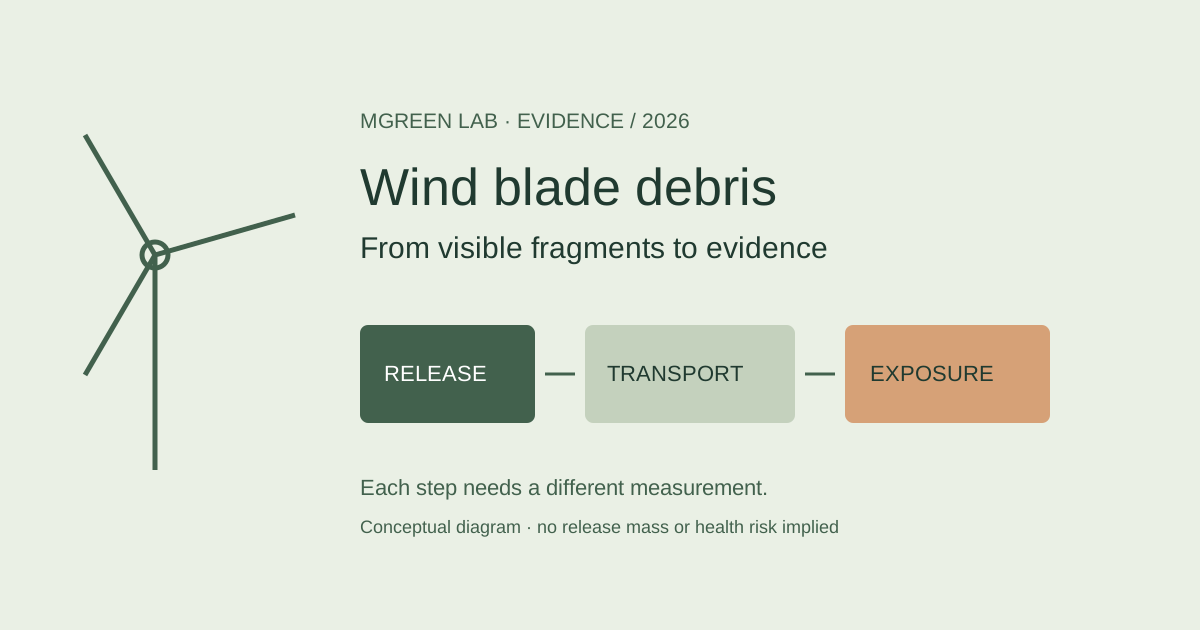
Figure 1 · The evidence chain from debris to health
- 01 · Release
Coating / composite debris / loose fibres
Identify material, size and source - 02 · Transport
Deposition / runoff / resuspension
Locations, weather and background - 03 · Exposure
Skin / eyes / inhalation
Concentration, contact and duration - 04 · Outcome
Irritation / injury / long-term questions
Relevant health evidence; no shortcuts
Original conceptual diagram; editorial analysis informed by [1][2][3]. Sequence indicates investigation steps, not proof that each occurred.
03 | What does 240 grams per year establish?
A 2025 TNO study combines Dutch offshore weather data with an erosion model. It estimates about 240 grams of microplastic per year from all three blades of a reference 15 MW turbine with polyurethane leading-edge protection. This is a coating-erosion estimate within a specific maintenance boundary, not collected glass-fibre mass or a measured average across all turbines. [1]
Applying that result to a project requires checking protection condition, weather and maintenance. It cannot supply accident release mass, soil accumulation or a resident inhalation dose. We do not chart incompatible online estimates as comparable measurements or convert released mass into health damage.
04 | A real incident: the commercial lesson from Vineyard Wind
In July 2024 a blade failed at Vineyard Wind 1, sending debris into the ocean and onto Nantucket shores. The operator subsequently reported further compromise of blade integrity and site precautions. The manufacturer attributed the event to a manufacturing deviation in its annual regulatory filing. This cannot be rewritten as necessarily caused by long-term ageing, nor does it establish an industry-wide failure probability. [4][6]
Nantucket announced a USD 10.5 million settlement with GE Vernova in 2025 concerning local and community economic losses. In January 2026 it announced a claims process, with a stated window ending on 26 June 2026. Community recovery and compensation can persist well after the incident. The settlement is neither total project loss nor a valuation of human toxicity. [5]
Procurement and operations must ask who detects defects, who can stop the turbine and who pays for recovery and community losses. Better materials matter, alongside manufacturing traceability, notification, access control and auditable cleanup. One incident does not settle the overall value of wind energy; it demonstrates why delivery responsibilities must include local external costs.
05 | A 2026 advance: delaying erosion does not eliminate risk
A paper published in August 2026 by Guevara-Sotelo, Teuwen and Masania grades platelet reinforcement through a polyurethane coating, keeping its exterior compliant and reinforcing the region near the substrate to manage impact stresses and acoustic impedance transitions. The optimised gradient approximately doubled erosion incubation time against the monolayer comparator in laboratory testing. [7][8]
This addresses a specific engineering question: how to delay the onset of surface erosion. It does not demonstrate twice the lifetime of a commercial blade, half the glass-fibre emissions at a wind farm, or fewer fracture incidents. Coating durability and structural integrity require related but distinct validation.
Procurement still needs multi-season field validation, performance after UV and temperature/moisture ageing, adhesion and repair compatibility, application quality control, and measurement of actual released-particle composition and size. Potential compatibility with spraying or rolling is not a warranted commercial deployment. More durable coatings also need lifecycle and particle-release assessment beyond erosion onset.
Figure 2 · Laboratory erosion incubation, normalised
| Architecture | Relative incubation |
|---|---|
| Monolayer | 1 |
| Optimised gradient | ≈2 |
Source [7], 2026 laboratory testing. Original redraw normalises the reported approximate doubling, not raw observations or confidence intervals; no field lifetime or emissions reduction inferred.
06 | Turn a field observation into verifiable evidence
If members of the public find suspected debris, they should avoid damaged equipment and controlled areas, record the location, time and photographs from a distance, and notify the operator and local authorities. Do not rub, break or sand fragments to identify them, or enter turbine work areas. Trained personnel should assess sampling and cleanup of unknown debris. No universal safety radius is proposed here.
Operators should turn “debris present” into an investigation chain: exclude nearby construction or other composite sources, then establish identity through microscopy and compositional analysis. Record size, count or mass, sampled area, wind, rainfall, blade identity and recent maintenance. Design soil-deposition and airborne-exposure sampling separately, with upwind/background comparators, blanks and detection limits.
Finding fibres does not by itself establish disease; a non-detect applies only to the sample, method and detection limit. Community communication should disclose measurement boundaries and cleanup endpoints, with follow-up after storms or repairs. This is our proposed governance framework, not a universal statutory procedure.
Explore by observation: what evidence comes next?
Visible fragments on the ground
Record and report; professional teams should identify and clean up. Material identity, distribution and maintenance history are needed, not a conversion into inhaled dose.
Dust during repair or sanding
Assess the task and personal/area air monitoring with appropriate engineering controls. Occupational dust guidance identifies hazards; it does not establish resident exposure.
Structural blade abnormality
Qualified teams should assess operation and access control. A surface erosion model cannot decide whether continued operation is acceptable.
Editorial recommendations; not a substitute for site safety assessment or local requirements.
07 | When is intervention worth procuring?
Where protection is damaged, debris is visible, vibration is abnormal or a manufacturing batch alert exists, qualified teams should assess operation, defects and site measures. A low average emissions estimate is no reason to delay investigation. Acceptance criteria for coatings should include durability, inspectability, field repair and waste capture.
For a new material, start with a controlled pilot and record application time, curing window, adhesion, repeat repairs and actual released particles before expanding against agreed criteria. For wind-farm management, contracts should address response times, defect follow-up, cleanup boundaries and resampling results. Unmeasured community health benefits cannot justify a coating premium.
Wind power’s material responsibility extends beyond electricity generation. The useful investment connects protection maintenance, structural quality and evidence about community exposure. For the reported observation, identify the debris and its source, then respond to actual exposure and failure conditions. Both a blanket cancer claim and a blanket harmlessness claim exceed the evidence.
Figure 3 · What each evidence type can establish
| Evidence | Supports | Does not establish |
|---|---|---|
| Coating erosion model | Conditional mass estimate [1] | Local airborne glass-fibre concentration |
| Occupational guidance | Irritation hazards and routes [2][3] | Actual resident dose |
| Incident and settlement | Debris and economic consequences [4][5][6] | Fleet failure rate or health loss |
| 2026 materials testing | Improved incubation time [7] | Commercial life, warranty or field emissions |
Mgreen Lab editorial evidence matrix; distinct evidence tasks are not numerically pooled.
08 | Sources and method
Written by Mgreen Lab; evidence checked through 23 October 2026. This is public-evidence research and editorial analysis, not a site investigation, medical diagnosis or manufacturer certification. Original figures distinguish laboratory results, model estimates and incident disclosures. The source register retains original links, dates, supporting locations and limitations.
Inspectable sources and related insights
- Caboni et al. — Estimating microplastic emissions from offshore wind turbine blades in the Dutch North Sea2025-06-13 · Peer-reviewed modelling study · Accessed 2026-10-2315 MW reference turbine, polyurethane leading-edge protection, Dutch weather; rain erosion model, not a field particle census or health assessment. Excludes hail and installation/maintenance/deconstruction emissions.
- NIOSH — Fibrous glass dust2019-10-30 (reviewed) · Occupational hazard guidance · Accessed 2026-10-23Workplace guidance identifies irritation hazards; not a resident epidemiology study or a community exposure threshold.
- ATSDR — Toxicological Profile for Synthetic Vitreous Fibers2004-09 · Government toxicology review · Accessed 2026-10-23Older review across several fibre types; cannot classify an unidentified blade fragment or prove local long-term risk.
- Vineyard Wind — Update on Damaged GE Vernova Blade2024-07-17 · Operator incident disclosure · Accessed 2026-10-23Incident-specific operational disclosure, not a universal setback rule.
- Nantucket — Settlement with GE Vernova / Community Claims Fund2025-07-11; updated 2026-01-26 · Municipal announcement and implementation record · Accessed 2026-10-23USD 10.5m settlement covers town/community economic consequences; neither total project loss nor a health-damage valuation. Claims window is historical.
- GE Vernova — 2024 Form 10-K2025 (FY2024) · Company regulatory filing · Accessed 2026-10-23Manufacturer attribution; no independently estimated fleet failure rate.
- Guevara-Sotelo, Teuwen & Masania — Bio-Inspired Gradient Coatings Enhance the Leading Edge Erosion Resistance of Wind Blades2026-08-06 · Peer-reviewed laboratory study · Accessed 2026-10-23Laboratory incubation improvement, not a doubling of commercial blade life, a field emissions reduction factor or an approved repair product.
- TU Delft — Small-scale design changes, big improvements in wind turbine sustainability2026-08-10 · University research explanation · Accessed 2026-10-23Same research as [7], not independent replication or commercial delivery evidence.
Lifecycle questions · Green technology and design management
叶片受损和碎片释放是实际存在的问题;玻璃纤维粉尘也有明确的刺激危害。但“老化后地面有碎片”不能单独证明附近居民已经受到长期健康损害。本文把材料释放、环境迁移、人体暴露和结构事故分开,寻找能支持治理与采购的证据。
01|先分清:涂层、复合材料与断裂碎片
大型叶片通常是多层结构:外层保护涂层、树脂基体及玻璃纤维等增强材料共同承担功能;部分设计也使用碳纤维。玻璃纤维增强塑料不是一束裸露的玻璃丝。健康判断必须先回答:掉下来的究竟是涂层颗粒、含树脂的复合碎片,还是已游离的纤维?
雨滴反复撞击会损伤前缘保护层。保护失效、维修打磨和结构断裂又可能形成不同组成、形状与尺寸的碎屑。这些过程不能用一个“每台风机掉多少玻璃纤维”的平均数代替。模型研究只覆盖其设定的过程,不能自动包含事故与维修。[1][7]
因此,“风机下方出现很多碎片”应被当作需要定位来源的现场信号。没有样本鉴定、时间记录和维修记录,不能把某处观察提升为所有老化风场的普遍事实;也不能因为日常排放模型较低,就否认已经发生的局部碎片事件。
02|从“有害材料”到“人受到伤害”,中间缺什么?
玻璃纤维粉尘接触皮肤、眼睛和呼吸道可引起刺激;这是应当控制的真实危害。NIOSH 的职业资料列出了相关暴露途径与症状。但工作场所限值不能直接当作居民区“安全距离”或土壤安全标准。[2]
可见碎片可能造成接触与机械伤害;空气中可吸入的细小颗粒则是另一类测量对象。地面碎片数量不能换算为空气纤维浓度。还需要颗粒尺寸与形态、空气浓度、暴露时长和接触人群,才能讨论剂量与风险。完整复合碎片、裸纤维和树脂成分也不宜混成一个毒性结论。
ATSDR 指出,合成玻璃态纤维与石棉的断裂方式及生物持久性存在差异。因此不能把“玻璃纤维”直接写成“石棉式致癌”;反过来,也不能把缺少居民长期研究写成无害证明。本文没有取得用户所述地点的检测样本,不对该地作暴露或疾病归因。[3]
03|240 克/年说明什么,又遗漏什么?
2025 年 TNO 研究以荷兰海上气象资料和侵蚀模型,估算配有聚氨酯前缘保护的 15 MW 参考风机,三支叶片合计每年约释放 240 克微塑料。这是特定维护边界内的涂层侵蚀估算,并非现场收集到的玻璃纤维重量,也不是对所有风机的测量平均值。[1]
把这类结果用于项目判断时,首先应核对保护层状态、天气与维修条件;不能把它扩展为断裂事故排放量、土壤残留量或居民吸入剂量。本文不把口径各异的网络数字放在同一柱状图中,也不从质量排放量推算健康损失。
04|事故已经发生:Vineyard Wind 的商业教训
2024 年 7 月 Vineyard Wind 1 叶片失效,碎屑进入海洋并到达 Nantucket 海岸。运营方当时披露叶片完整性进一步受损,并采取现场警戒措施。制造商在年度监管文件中将事件归因于制造偏差。这不能被改写成“一定是长期老化所致”,也不足以计算整个行业的断裂概率。[4][6]
Nantucket 在 2025 年公布与 GE Vernova 达成 1,050 万美元和解,涉及当地及社区经济损失;2026 年 1 月又公布索赔程序,公告所载申请窗口至 2026 年 6 月 26 日。这个案例说明社区恢复与商业补偿可以延续很久;和解金额不是完整项目损失,也不是对人体毒性的定价。[5]
采购与运维由此要同时问三件事:谁能发现缺陷,谁有权停机,谁承担回收与社区损失。材料改进有价值,但不能替代制造质量追溯、事件通报、现场封控和可审计清理。一次事故也不能证明风电整体失去价值;它证明局部外部成本需要进入交付责任。
05|2026 年研究进展:延迟侵蚀,不等于消除风险
Guevara-Sotelo、Teuwen 与 Masania 于 2026 年 8 月发表的研究,把片状增强材料沿聚氨酯涂层厚度做成梯度,保持外层柔顺、靠近基底处增强,以管理撞击应力与声阻抗过渡。在实验室侵蚀测试中,优化梯度结构相较单层对照将侵蚀孕育时间提高到约两倍。[7][8]
这项进展回答了一个具体工程问题:怎样推迟表面开始出现侵蚀。它没有证明整支商用叶片寿命翻倍,也没有测出风场玻璃纤维排放减半或断裂事故减少。涂层与结构失效属于相互关联但不同的验证任务。
从论文走向采购仍需多季节现场验证、紫外与温湿老化后性能、附着与修补兼容性、施工质量控制,以及实际脱落物组成和尺寸的测量。可喷涂或可滚涂的制造潜力,不等于已有受保修的商业部署。更耐久的涂层也应接受生命周期和颗粒释放评价,不能只看侵蚀起始时间。
06|把现场观察转成可核查的证据
公众发现疑似碎片时,应避开正在受损的设备及现场警戒区,记录位置、时间和远距离照片,并向运营方与当地主管部门报告。不要为了确认材质而徒手揉搓、折断、打磨或自行进入风机周边作业区。未知碎片的采集与清理由受训人员按现场评估处理;这里不提供通用安全半径。
运营方应把“有碎片”转为调查链:先排除邻近施工和其他复合材料来源,再用材料显微与成分分析确认来源;同时记录碎片尺寸、数量或质量、样区面积、风向、降雨、叶片编号和最近维修。土壤沉降与空气暴露要分开设计采样,设置上风向或背景对照、空白样和检出限,才能解释发现或未检出。
发现纤维不等于已经证明疾病,未检出也只代表在该样本、方法和检出限内未发现。居民沟通应公开检测口径与清理终点,并建立暴雨后或维修后的复查机制。这是本文建议的治理框架,并非某一国家的统一法定流程。
按现场情形展开:下一步需要什么证据?
地面可见碎片
先记录并报告,交由专业人员确认来源和清理。需要材料鉴定、分布与维修记录;不能据此计算吸入剂量。
打磨或维修扬尘
需要作业过程与个人/区域空气监测,配合适当工程控制。职业粉尘资料适用于识别危害,不自动代表居民暴露。
叶片出现结构异常
交由合格团队评估运行与封控。材料表面侵蚀模型不能决定是否可继续运行。
以上为编辑建议;不能代替现场安全评估或当地要求。
07|什么情况下值得投入?
已有保护层破损、可见碎片、异常振动或制造批次警报时,应由合格团队评估运行状态、缺陷范围与现场措施,不能以低平均排放估计推迟调查。涂层方案应把耐久性、可检查性、现场可修复性和废物收集一起写入验收条件。
对新材料,建议先做有对照的局部试验,记录施工工时、固化窗口、附着状态、返修次数及实际释放颗粒;达到预先约定的指标后再扩展。对风场管理,建议把碎片报告到响应的时间、缺陷复查覆盖率、清理范围与复测结果纳入合同。不能用尚未测出的居民健康收益替涂层溢价背书。
结论是:风电的材料责任不能止于发出清洁电力。最值得投入的是把防护层维护、结构质量和社区暴露证据连成闭环。对用户提出的现象,合理的第一步是确认碎片并追溯来源,再按实际暴露与失效状态采取措施;夸大成普遍致癌和轻描淡写成无害,都越过了证据。
08|来源与方法说明
本文由 Mgreen Lab 撰写,资料核查截至 2026 年 10 月 23 日。属于公开证据研究与编辑分析,不是现场调查、医学诊断或制造商认证。图表为原创重绘与证据组织;实验室结果、模型估算和事故披露均分别标注。来源清单保留了原始链接、日期、支持位置及限制。
可核查来源与相关洞察
- Caboni et al. — Estimating microplastic emissions from offshore wind turbine blades in the Dutch North Sea2025-06-13 · Peer-reviewed modelling study · 访问 2026-10-2315 MW参考风机、聚氨酯前缘保护与荷兰气象下的雨蚀模型;非现场颗粒普查或健康评估,不含冰雹及安装、维修和拆解排放。
- NIOSH — Fibrous glass dust2019-10-30 (reviewed) · Occupational hazard guidance · 访问 2026-10-23职业危害指导,非居民流行病学研究或社区暴露阈值。
- ATSDR — Toxicological Profile for Synthetic Vitreous Fibers2004-09 · Government toxicology review · 访问 2026-10-23较早的多纤维类型综述,不能鉴定未知叶片碎片或证明本地长期风险。
- Vineyard Wind — Update on Damaged GE Vernova Blade2024-07-17 · Operator incident disclosure · 访问 2026-10-23运营方对特定事故的披露,非通用退让距离规范。
- Nantucket — Settlement with GE Vernova / Community Claims Fund2025-07-11; updated 2026-01-26 · Municipal announcement and implementation record · 访问 2026-10-231,050万美元和解涉及当地经济后果,非项目全部损失或健康损害估值;所述申请窗口已过。
- GE Vernova — 2024 Form 10-K2025 (FY2024) · Company regulatory filing · 访问 2026-10-23制造商归因,不能提供独立的全行业失效概率。
- Guevara-Sotelo, Teuwen & Masania — Bio-Inspired Gradient Coatings Enhance the Leading Edge Erosion Resistance of Wind Blades2026-08-06 · Peer-reviewed laboratory study · 访问 2026-10-23实验室孕育时间改善,不等于商用叶片寿命翻倍、现场减排系数或获准维修产品。
- TU Delft — Small-scale design changes, big improvements in wind turbine sustainability2026-08-10 · University research explanation · 访问 2026-10-23与[7]为同一研究,非独立重复验证或商业交付证据。